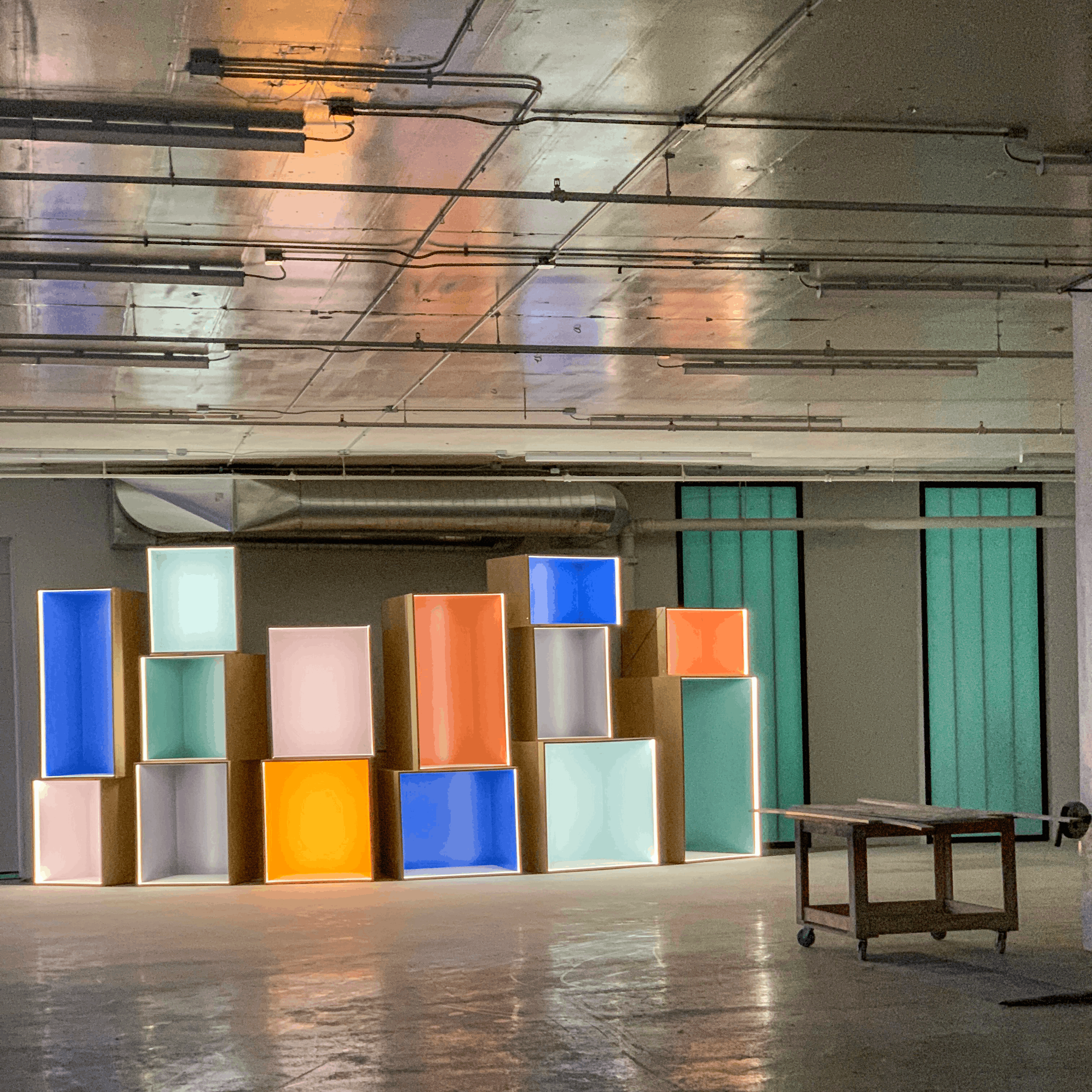
Beyond the Render: Why Integrated Custom Fabrication is the Antidote to Project Drift
The transition from a digital render to a physical environment is the most precarious phase of any brand activation. In the world of high-stakes marketing, a render is a promise. It is a vision of a flawless, immersive world where every lighting fixture, joint, and material finish works in perfect harmony. However, without a strategy rooted in custom fabrication, that promise often dissolves the moment it hits the shop floor.
Project drift is the silent killer of creative ambition. It happens when the team designing the experience is fundamentally disconnected from the team building it. When these two worlds are separated by different companies, different incentives, and different languages, the original intent is diluted. At Oetee, we believe that "Intentionally designed. Obsessively built." is not just a slogan. It is a safeguard against the mediocrity that results from a fragmented integrated design-build process.
The High Cost of the Design-Build Disconnect
When a design agency hands off a concept to a third-party fabricator, a game of "telephone" begins. The fabricator might look at a complex cantilevered structure and determine it is structurally impossible within the budget. They might substitute a premium birch plywood for a cheaper alternative without understanding how the grain was meant to catch the light.
This disconnect forces the Brand Manager into a corner. You are suddenly faced with "value engineering" choices that strip the soul out of the project. Instead of an immersive brand home, you end up with a series of compromises that feel hollow to the end user.
The financial cost is equally taxing. Every time a design has to be sent back for revisions because it was not feasible for construction, the clock ticks. In the world of experiential marketing, time is the one resource you cannot buy back. Integrated custom fabrication eliminates this back-and-forth by putting the builders and designers at the same table from day one.
The Zero Degrees of Separation Advantage
Our philosophy is built on the "Zero Degrees of Separation" model. This means that the person sketching the CAD drawing can walk fifty feet to the CNC machine or the welding station to consult with the lead builder. This immediate feedback loop turns a linear process into a collaborative cycle.
Imagine a scenario where a creative lead wants to use a specific reactive LED sequence embedded within a translucent acrylic wall. In a traditional model, the designer might spec a product that the fabricator cannot source or install correctly. In our shop, we prototype that interaction in real-time.
By housing everything under one roof, we eliminate the execution risk that keeps Marketing Directors awake at night. We do not just build what is on the paper. We build the intent behind the paper. This integration allows for a level of "Obsessive" detail that is simply impossible when parts of the project are outsourced to disparate vendors.
Feasibility as a Creative Tool
Many designers fear that thinking about "how it gets built" will limit their creativity. We argue the opposite. When you understand the limits and possibilities of custom fabrication, you can push the boundaries further. Knowing exactly how a specific grade of steel will hold a load allows you to design thinner, more elegant structures that seem to defy gravity.
This technical literacy is what we call "Experiential Intelligence." It is the ability to look at a raw material and see the final interaction. For an Event Planner, this means fewer "we can't do that" conversations and more "here is how we make that happen" solutions.
When the fabrication team is involved early, they can suggest material innovations that the design team might not have considered. Perhaps there is a new composite material that offers the same aesthetic as stone but at half the weight and cost. This collaborative spirit ensures that the budget is spent on things the audience will actually see and feel, rather than on fixing preventable logistical errors.
Navigating the "Zero-Panic" Protocol
The final weeks before a launch are often characterized by high stress and "firefighting." This is usually because a design flaw was discovered too late in the build phase. Our system is designed to be a "foolproof system" that identifies these roadblocks months in advance.
Think about the Fire Marshal or the Venue Manager. These are stakeholders who can shut down an activation if the engineering does not meet local codes. Because our fabrication team understands the structural requirements of different jurisdictions (from Chicago to global footprints), we build compliance into the design itself.
The "Zero-Panic" protocol means that when the crates arrive at the venue, everything fits. The pre-drilled holes align. The wiring harnesses are labeled. The assembly is intuitive. We believe that positivity promotes progress, and there is nothing more positive than a seamless load-in where the only surprise is how good the final product looks.
Ready to see your vision built without compromise?
Contact our team to discuss your next project. Email: afterhours@oetee.com
Key Takeaways
- Integrated Workflow: One-roof design and build eliminates the communication gaps that lead to project drift.
- Risk Mitigation: Integrated teams catch technical and structural issues during the design phase, not the build phase.
- Creative Freedom: Knowing the "how" of fabrication allows for more ambitious and daring physical designs.
- Execution Certainty: A collaborative process leads to a stress-free installation and higher ROI for the brand.
